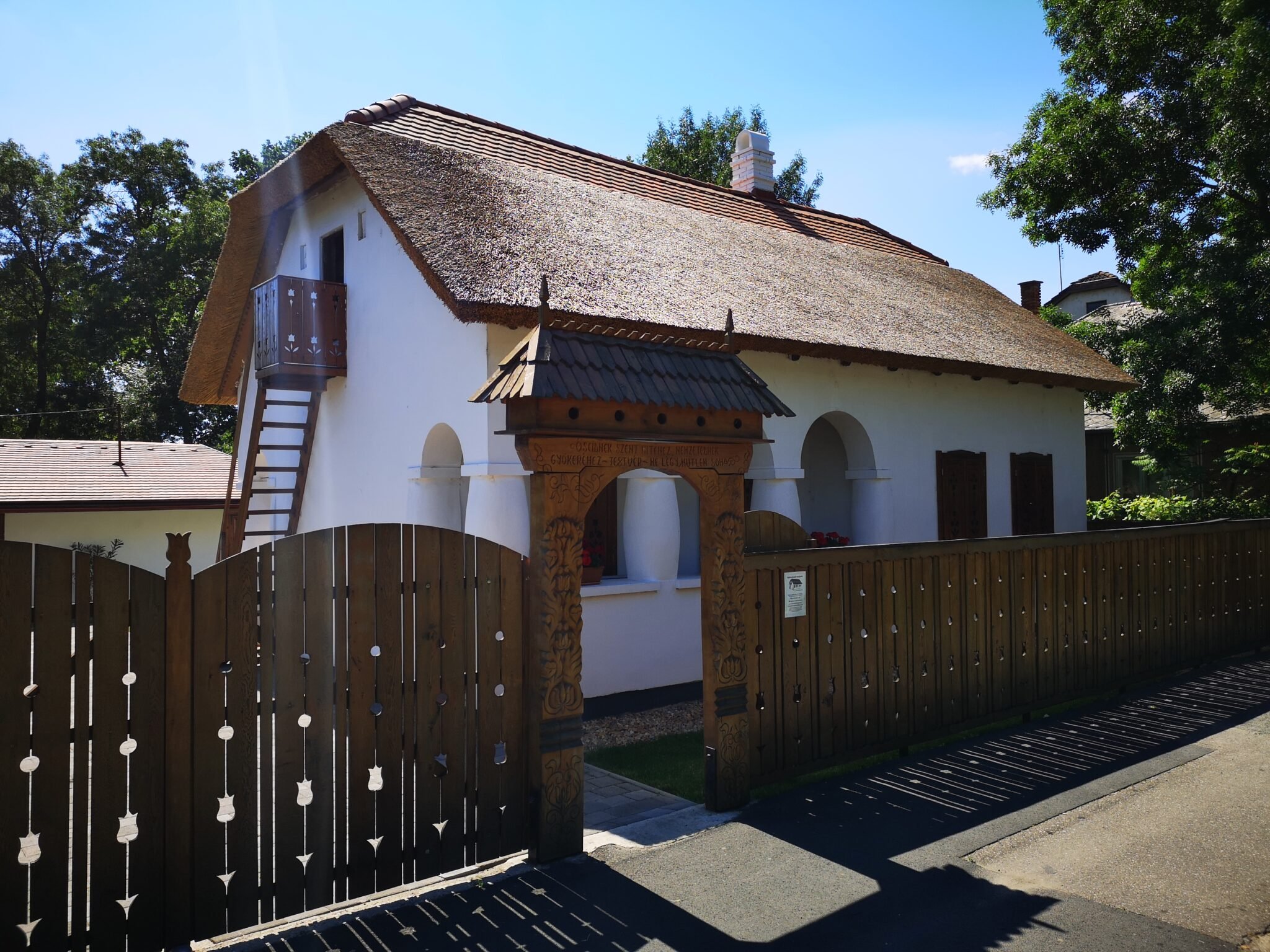
Today, the folk building houses a collection of folk art and visitors can learn about pottery through museum education sessions.
István Fazekas was born on 18 April 1924 in Nádudvar, a member of a dynasty that had been involved in pottery for centuries. He learned to play the potter's wheel at an early age, but he was not originally trained as a potter. Later, he was a potter in his father's workshop and became a potter with him. In 1952 he became a folk artist and in 1954 he was one of the first to be awarded the title of Master of Folk Art, for his outstanding artistic development and promotion of black pottery from Nadudvar. In 1973, he moved his headquarters from Nádudvar to Hajdúszoboszló, where he set up his workshop and created the Hajdúszoboszló Pottery House by his own hand.
It has built a showroom and workshop in the shape of a traditional thatched-roof farmhouse and has also become involved in tourism. The Fazekas House in Hajdúszoboszló became ownerless after the death of István Fazekas in 2007.
In 2016, the 40th anniversary of the museum's opening, the house will reopen its doors to further serve Hungarian folk art.
Our exhibition offers a taste of the material culture of the peasantry of the lowlands, with a folklore value, mainly through the presentation of the peasant's housing culture and the typical tools of food production. In the long process of the development of peasant utensils, the focus has been on practicality and practicality. For this reason, their creators, the makers of the period, sought to create objects from natural materials in the simplest possible solutions. This resulted in the creation of „handy”, usable pieces and, from an aesthetic point of view, a very clear formal world.
a selection of decorative and utilitarian objects of the 19th century decorated with national symbols, including rare and interesting objects.
In addition to focusing on folk art masterpieces decorated with our national symbols, the exhibition also points out that these utilitarian objects could only have been made if their customers, buyers and makers proudly claimed and proclaimed their Hungarianness.
As a potter's workshop, clay as a raw material for earthenware is presented both in exhibitions and in museum education sessions. The exhibition of bricks was also intended to show another use of clay, its application in the building industry, through the different types of sealing bricks.
decorates the walls of the courtyard and the workshops. It presents a cross-section of the seal bricks of the Carpathian Basin from the 1600s to the present day.
A selection made for the 100th anniversary of the birth of István Fazekas. It commemorates both his work and the tradition of black pottery making through 18th, 19th and 20th century ceramics and the art of pottery making.